The Old Gaol House has limitations of authentic 19th-century architecture and is not wheelchair-accessible. Steep stairs and narrow doorways may present difficulties for those with physical disabilities.
There is a wheelchair-accessible kiosk with information about this historic site.
Service animals are welcome to visit the Old Jail. We follow the Federal government’s guidelines on service animals. The NHA welcomes dogs that are individually trained to perform a task or work for a person with a disability, but please leave pets at home.
No public restrooms available.
About the Old Jail
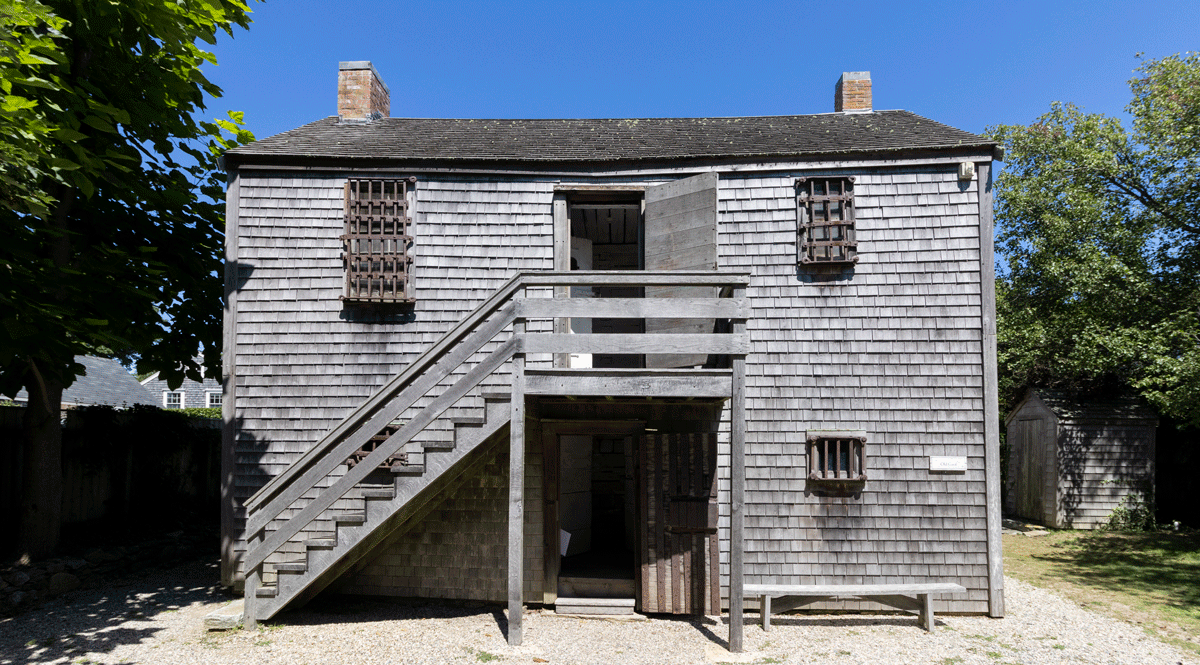
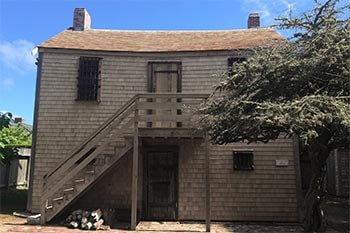
Nantucket built its first jail in 1696 on Vestal Street. In 1805 taxpayers decided to spend $2,090 (roughly the cost of building a whaleship at the time) to build a new, sturdier penal facility also on Vestal Street. Opened in 1805 and dubbed the “New Gaol,” the wood and iron structure represents colonial architecture with exceptional reinforcements.
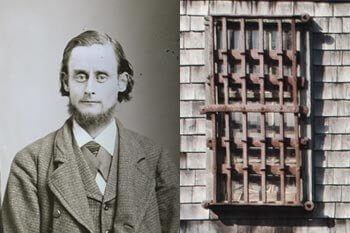
The new jail was constructed using massive oak timbers with iron bolts running the length of the walls, iron rods across the windows and heavy wooden doors reinforced with iron.
The solidly-built jail forced prisoners to come up with creative escape plans. One 15-year-old boy crawled out the chimney flue; another prisoner had a key delivered to his second floor window by a woman using a block-and-tackle rigged up for the purpose.
The jail housed its last prisoner in 1933. The town closed the property and transferred it to the Nantucket Historical Association in 1946.
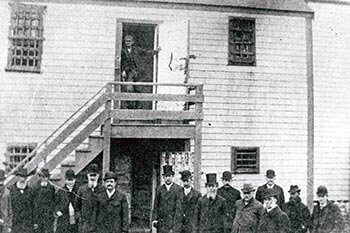
Visit the Old Jail (also known as Old Gaol) just as it stood in 1805. Hover shows a crowd gathered in front of the jail in 1893 when the Commission on Prisons inspected the jail. Frederick Parker, Keeper of the Jail, is standing in the upper door-way. (P7150)
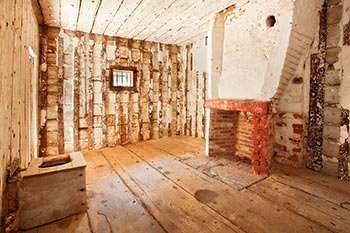
Explore the cells on both floors and imagine what it was like to be incarcerated on Nantucket in the 19th century.
Hear the stories of some of the prisoners, such as William Chadwick (GPN1754), convicted of embezzlement in 1884. He served his term in a cell comfortably furnished by his family where he read and made crafts, such as lightship baskets. Prisoners were often allowed freedoms and doors were not always locked.
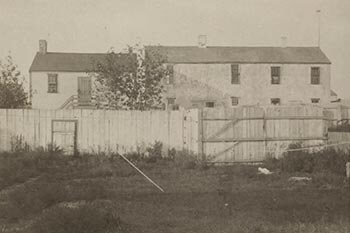
Learn about the House of Correction, moved from the Quaise Asylum in 1855 and sited next to the Old Jail. It was used for debtors, habitual drunkards, the mentally ill, and juvenile prisoners—also used as a workhouse where debtors could ply their trades to pay their bills. It was no longer needed by 1933 and was dismantled in 1954.
We ask all of our visitors to conduct themselves in a respectful way at all NHA properties in accordance with the Code of Conduct and all laws and local ordinances.
The NHA preserves, interprets, and shares the diverse stories of Nantucket and its people with all audiences through its collections, properties, programs, and research.
We use cookies to deliver our online services. Details and instructions on how to disable those cookies are set out in our Privacy Policy. By clicking I Accept, you consent to our use of cookies unless you have disabled them.